


Who Was Henry Clay McDougal?
Henry Clay McDougal was born in Marion County, VA, on Dec. 9, 1844. He enlisted in the 6th Infantry Volunteers a Union regiment, and served through the Civil War. At its close, he came to Missouri and located at Bancroft (Lincoln Township in Daviess County, MO) near...
First National Bank of Gallatin, MO
1922 Robbery at the First National Bank of Gallatin. In November, 1922, six armed men robbed the First National Bank of Gallatin then located on the south side of the square. They used a large quantity of nitroglycerin in four explosions which badly damaged the vault,...
1887: Unsolved Murder of John Gagan in Daviess County, MO
A terrible crime was committed in the north part of Daviess County in December, 1887, by which a harmless old man was foully murdered, shot down like a dog and left to die alone and unattended. After more than a century, this murder remains unsolved. John Gagan, an...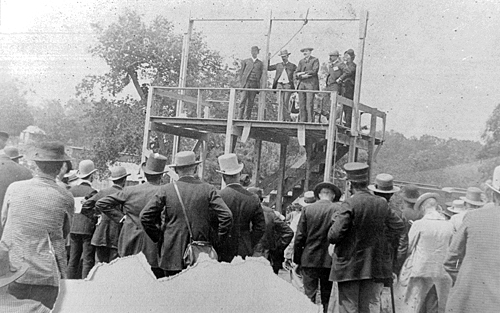
Gallows for Joe Jump Drew Huge Crowd by Special Train
A site a few hundred feet north of Highway 6 at Gallatin, and just west of Route MM, marks the spot where two murderers died in 1886, in what were to be among the last public hangings in Missouri. Joe Jump and John Smith were found guilty of the murder of William C....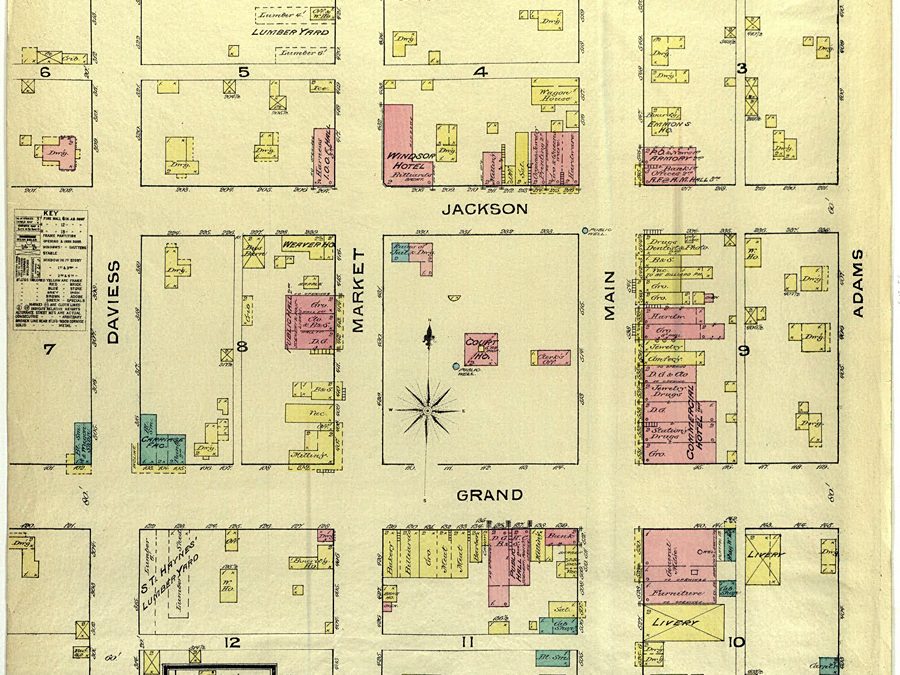
1886 Plat Map of Gallatin, MO
This 1886 plat map shows Gallatin, MO, population 1,800. Public water facilities are “not good” with no steam nor hand pump engines nor hose cars for fighting fires. The map, drawn 50 feet to an inch, is by Sanborn Map & Publishing Company, Limited, of...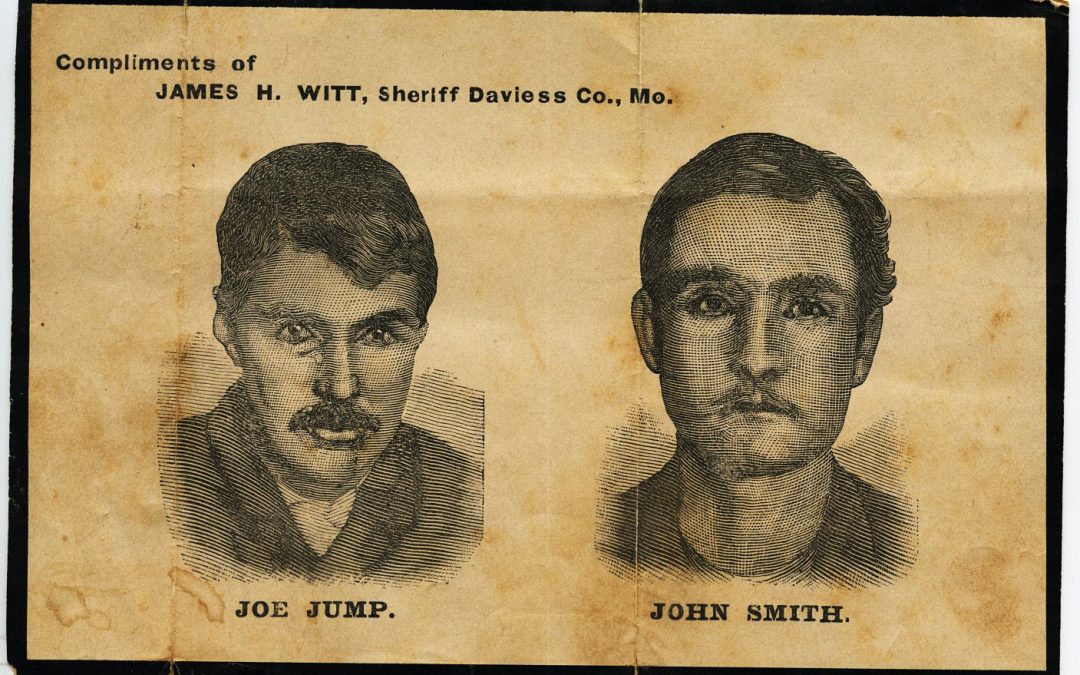
1885: Public Hanging of Joe Jump and John Smith at Gallatin, MO
The hanging of Joe Jump, 19, and John Smith, 22, for the murder of Wm. Gladson on Dec. 29, 1885, was Daviess County’s first and only public execution. The crime took place between the trio of friends — Jump, Smith and Gladson. Both Joe and John were shady...
1885: Lamplighters Once Served the Gallatin Community
For only a period of 10 to perhaps 12 years, Gallatin used the services of a gas lamplighter at selected locations before electricity came to town. As the old song goes, the lamplighter… “made the night a little brighter wherever he would go, the old...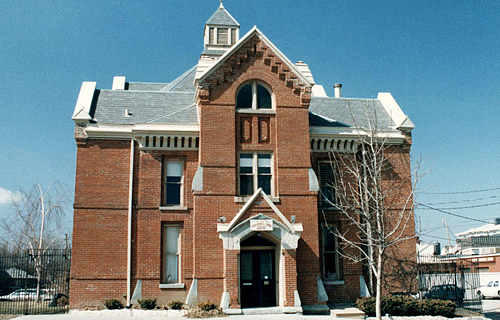
Larger 3-Story Rotary Jail at Council Bluffs, IA, Built in 1885
The antique Pottawattamie County Rotary Jail at Council Bluffs, IA, is the largest of the three rotary jails existent in the United States. This jail is impressive since its squirrel cage housed inmates on three levels. Although no longer operational, all three levels...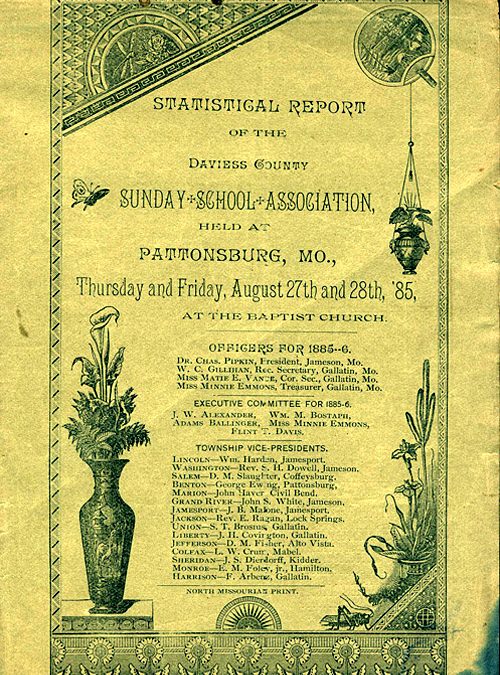
1885: Daviess County Sunday School Report
The 1885 annual report for the the Daviess County Sunday School Association at a meeting held in Pattonsburg, MO: Statistics describing Daviess County were part of an 1885 meeting of the Daviess County Sunday School...
Family Stories Abound About Outlaws Frank & Jesse James
Many families in Northwest Missouri hand down stories about outlaws Frank and Jesse James from generation to generation. Some even claim relationships. Before sharing a few samples (as follows below), here’s how to hunt your bad man ancestor. Start your research...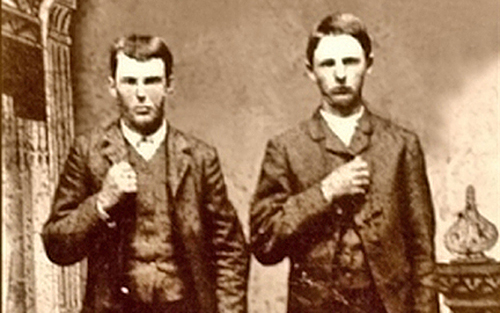
The Question Remains: Who Were ‘The James Boys?’
The stories and legends about the James boys are so many and their escapades real or fancied, have been recounted by countless authors, would be authors, news writers, motion pictures and others to the extent that great confusion prevails as to the true story of their...
Gov. Crittenden Expresses Satisfaction on James Boys Demise
The “Autobiography of Governor T.T. Crittenden (1832-1909) leaves little to imagination about the governor’s personal involvement and interest in what was to be done about outlaws Frank & Jesse James — and his satisfaction of the outlaws’...
1833: Grand River Church the First Organized for Baptists
In 1933, the Gallatin North Missourian marked the 100th anniversary of the Grand River Church near Jameson, one of Daviess County’s oldest institutions, by printing a history compiled by Editor Allen F. Wade of the Jameson Gem. At the time of this anniversary,...
Daviess County Jury Believes Frank James, Gives Acquittal
Jesse James died in the prime of life in a way that could only multiply and strengthen the already internationally-known legend of the James Gang. But what of his soft-spoken brother, the student of Shakespeare? What marked the end of his life in crime? Frank James...
Daviess County James Gang Events in Context of Their Times
Three significant events occurred in Daviess County, MO, which dramatically plays into the lore and legend of outlaws Frank and Jesse James. When considering these dates, also consider what other newsworthy events of significance were underway at that particular time:...
1883 Frank James Trial: One Conclusion Shared
The following conclusion about the 1883 trial of Frank James is taken from an address given by General John T. Barker for a meeting of the Boone County Bar Association held at Columbia (MO) on August 7, 1952. It reads, in part, as follows: Conclusion The trial lasted...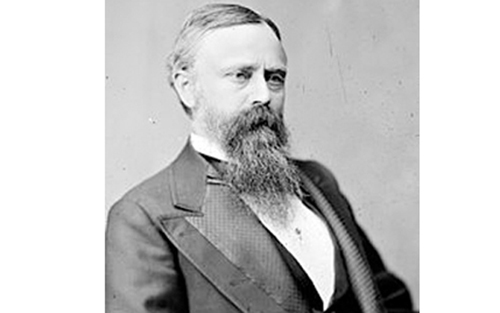
1883 Trial: Counselors For and Against Defendant Frank James
An account published in the Weekly Kansas City Star on Sept. 4, 1940, offers the following description of legal counsel participating in the 1883 trial of Frank James at Gallatin, MO: “Rarely has the legal counsel on both sides of a case been composed of such...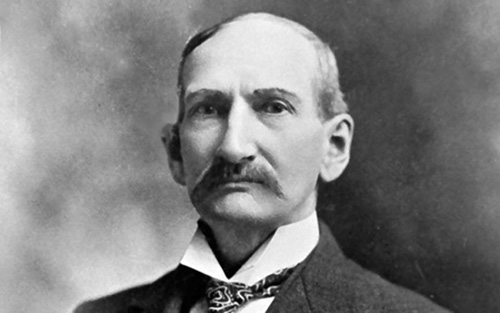
1883 Trial Overview: Frank James Claims an Alibi, Says He Was in Oklahoma
Frank James’s murder trial in 1883 in Gallatin, MO — where a jury found him not guilty — featured legal luminaries on both sides and impassioned references to the “Lost Cause” for which the bandit had fought two decades earlier. The story...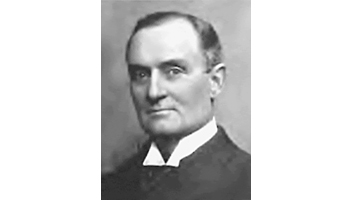
Ambitious Prosecutor Wm. Wallace of Jackson County, MO
The scars of the Civil War were fading in 1880 as a young Kansas City lawyer and Westminster College graduate named William Hockaday Wallace opened his bid for the prosecuting attorney’s seat in Jackson County, MO. General James A. Garfield and General Winfield...
Visit the 1889 Squirrel Cage Jail, located 2 blocks west of the Daviess County Courthouse in Gallatin, MO. This historic relic is listed on the National Register of Historic Places and serves as a visitors’ center — by appointment,
Trudi Burton, ph: 660.663.7342
Search digital posts from 1999 to 2021:
GallatinNorthMissourian.com
Read the last special edition published by the Gallatin North Missourian in 2021:
Daviess County History Guide